
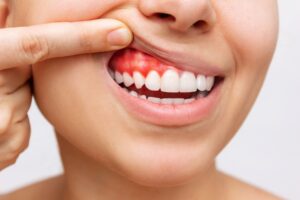
Many people focus on their teeth when they think of dental health, but the connective tissues are just as important. After all, without healthy gums, nothing would hold your teeth in place, which is why periodontitis, or advanced-stage gum disease, is the leading cause of permanent tooth loss.
But several falsehoods about this condition are mistakenly considered “common knowledge.” Continue reading to learn about 3 myths about gum disease that you shouldn’t believe!
Myth #1: It’s a Rare Condition
If you visited your dentist for a routine checkup and cleaning and they found signs of gum disease, you might assume you’ve developed a rare condition that doesn’t affect many people.
However, gum disease occurs when bacteria in your mouth form plaque along the gumlines and penetrate your tissues, triggering an incredibly common infection. This can affect people of all ages, though it’s more common in older adults. For instance, sources report that an estimated 42% to 47% of adults aged 30 or older have some form of gum disease, compared with 60% to 70% of those aged 65 or older.
Myth #2: It Only Affects the Mouth
It’s easy to assume that gum disease only affects structures in the mouth, like your teeth and connective tissues. But studies show this condition is also linked to other significant health concerns.
This is partly because any infection, including gum disease, can allow unhealthy bacteria to enter the bloodstream and cause chronic inflammation. This impairs the body’s immune system and other processes, such as insulin response, which has been tied to an increased risk of heart disease, diabetes, and Alzheimer’s.
Myth #3: It Can Always Be Cured
You might not think it’s a big deal if you’re diagnosed with gum disease if you’ve assumed that it’s always treatable, but that’s not necessarily true. Gingivitis, the earliest stage, can often be prevented, halted, or even reversed by flossing more consistently after brushing your teeth twice daily at home.
But if it has already progressed to more advanced stages, it can sometimes be managed but not completely cured. Some patients require ongoing maintenance, such as periodic deep cleanings, to help heal their connective tissues and prevent worsening issues, such as tooth loss.
If you’ve noticed that your gums bleed during your at-home oral hygiene routine or if they appear darker of puffier than usual, you might already have a problem. Contact your dentist sooner rather than later so they can treat the disease before it worsens.
About the Practice
Patients at South Ridge Dental benefit from two dentists who are dedicated to helping people of all ages build and maintain happy, healthy smiles. Drs. Ryan and Steven Shaffer have decades of combined experience and collaborate to offer a comprehensive menu of services, including gum disease treatment, conveniently under one roof. Their compassionate approach, combined with advanced technology, yields more comfortable, reliable results meant to last. You can request an appointment on the website or call (402) 423-1616.